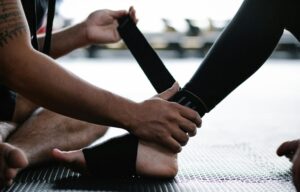
A rolled ankle on the trail or an over-eager serve on the tennis court can rip microscopic tears through muscle fibres and their fascia— a muscle sprain that does more than hurt. Each day of immobility drains metabolic rate, weakens bone, and nudges the brain toward frailty, making rapid recovery a pillar of modern anti-aging protocols.
Standard care still follows the evidence-based PEACE & LOVE roadmap—Protect, Elevate, Avoid anti‑inflammatory modalities, Compress, Educate; then Load, Optimism, Vascularise, Exercise—yet micro-dialysis work shows the first 48 hours explode with cytokines and proteases, while day-three satellite cells wait for growth factors and gentle tension to rebuild. That insight has shifted attention from icing inflammation into silence toward nudging it along with smarter, biology-friendly tools.
Autologous platelet-rich plasma (PRP) tops the list. In an eight-month-old prospective trial of semi-pro athletes, ultrasound-guided PRP cut return-to-play from 34 to 27 days and halved re-injury risk at six months. Researchers credited platelet-derived growth factor-BB, IGF-1, and VEGF for speeding angiogenesis and satellite-cell fusion, allowing isometric drills to start a week earlier.
Peptide medicine is the other headline. BPC-157, a gastric pentadecapeptide, boosts HO-1, tempers oxidative stress, and modulates nitric-oxide signalling. Clinicians sometimes pair micro-doses of BPC-157 with thymosin-β4 (TB-500) and PRP for stubborn grade-II tears, aiming to consolidate the inflammatory and proliferative phases into a tighter, less painful window. For longevity seekers, such speed matters. Recurrent sprains feed “inflammageing,” a low-grade cytokine hum that erodes insulin sensitivity and accelerates sarcopenia. Rapid, high-quality repair preserves fast-twitch fibres—key to gait speed and mortality risk—and keeps mitochondrial networks robust. Programs that track resting heart rate and grip strength now log sprain incidence as another marker of functional youth.
Still, the emerging toolbox—graded loading, nutrient support, PRP, and wellness compounds such as BPC-157—offers a realistic path to heal fast while safeguarding decade-long mobility. Staying current keeps us choosing therapies that serve both today’s sport and tomorrow’s stride.
Frequently Asked Questions
How long does a mild sprain take to heal?
Grade-I strains usually clear in 7–10 days if you begin pain-free isometrics by day 3 and progress to full-range strength work inside the first week. Skimping on sleep, protein, or gradual load can double that timeline, so lifestyle discipline matters as much as initial severity.
Is PRP worth the price?
Studies show PRP buys about a week of faster recovery and fewer recurrences, so it pays off for athletes, labourers, or anyone whose livelihood depends on swift return. For minor sprains, diligent rehab often equals PRP results; save injections for larger tissue gaps or repeat injuries after a candid cost-benefit chat.
Are peptides like BPC-157 safe?
Pre-clinical and small human data suggest low toxicity, but no long-term trials exist, and growth-factor activation poses a theoretical cancer risk. Use pharmacy-verified vials, limit courses to four weeks, and avoid if you’re pregnant, have active tumours, or compete under WADA rules. Blue Zone Clinics supplies third-party-tested peptides with physician oversight to support prudent, time-bound use.
How can I prevent future sprains as I age?
Prioritise eccentric strength drills, landing mechanics, and mobility work to keep tendons springy and reflexes sharp. Combine training with 1.2–1.6 g/kg of daily protein, adequate vitamin D, and collagen-rich foods or supplements. Weekly balance challenges—single-leg hops, Tai Chi—can cut sprain risk by up to 40 percent in longitudinal studies.
Disclaimer: This article is for informational purposes only and does not constitute medical advice.